
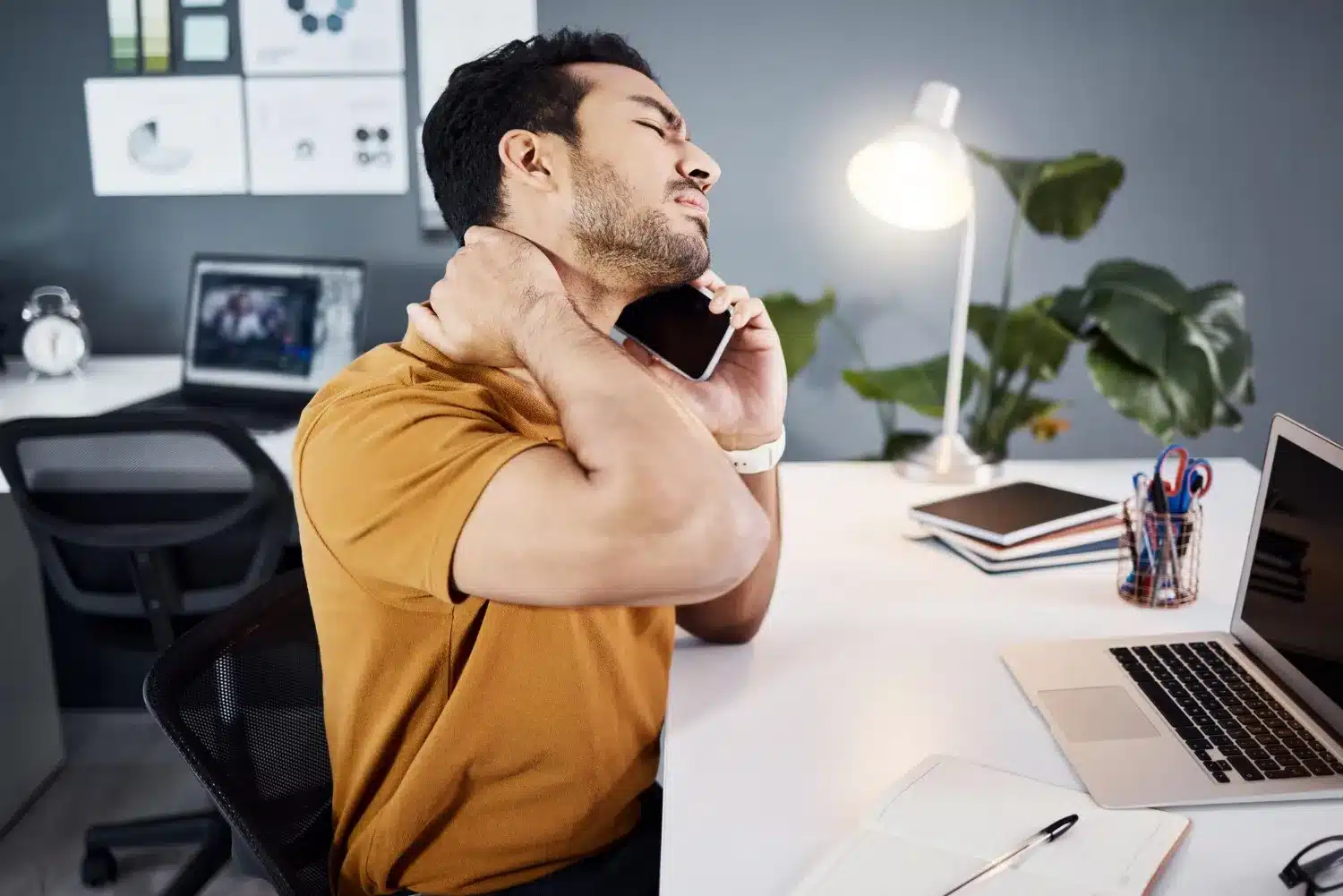
Have you ever rubbed your upper shoulders or stretched your neck after working at a desk for a few hours because it felt tight or stiff? Many people are familiar with this experience because of office work, remote work, long hours at a computer, and other desk-based lifestyles.
Many people experience persistent tension, stiffness, or tightness in the upper shoulders, especially after sitting at a desk for long periods. This discomfort is often related to upper trap tightness, neck pain, and a feeling of overwork in the trapezius muscle.
In this guide, you'll learn why upper trap tightness develops during desk work, what contributes to it, and what can help reduce discomfort.
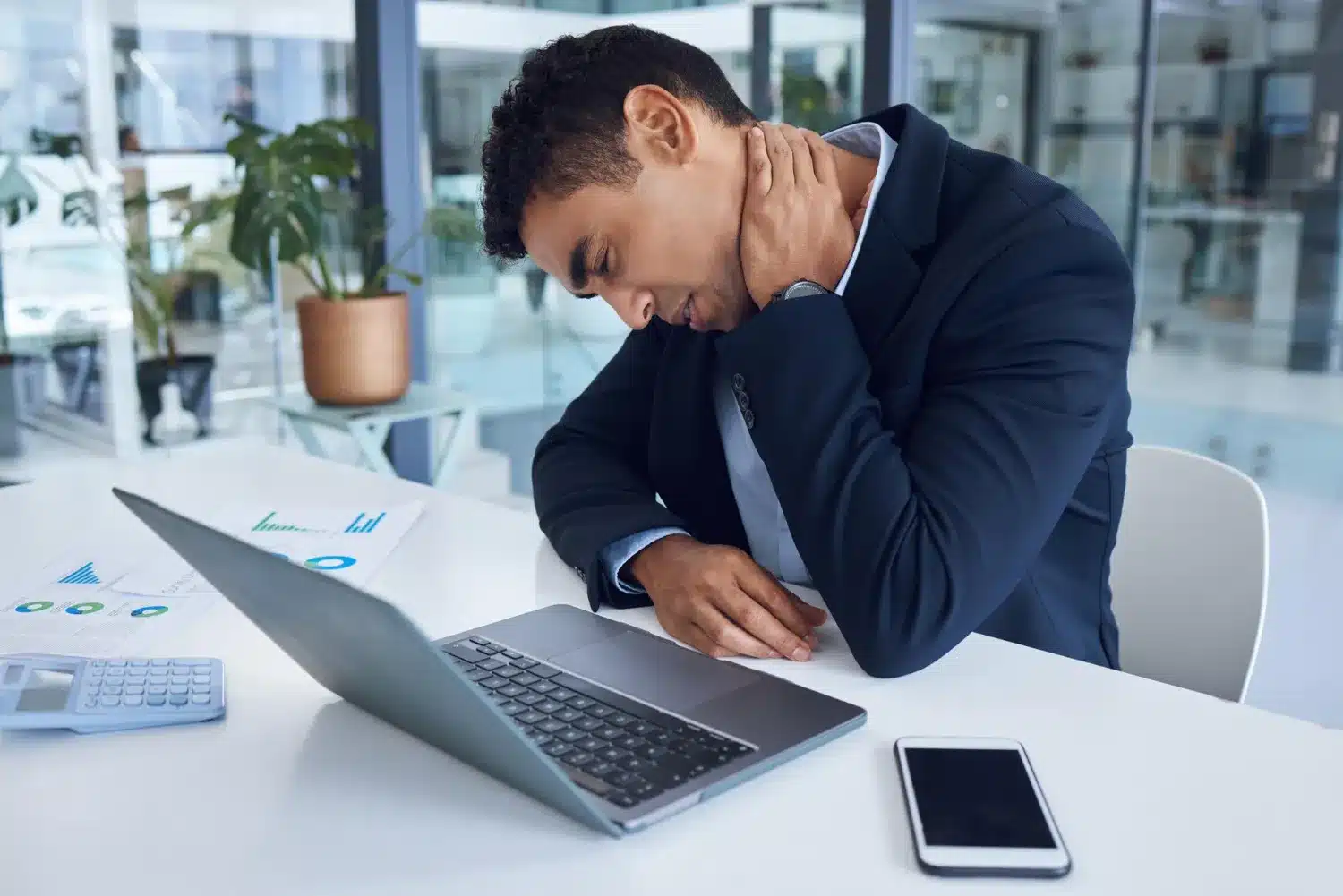
Why Do My Upper Traps Feel Tight After Desk Work?
Upper trap tightness from desk work usually isn't caused by a single factor. It is often caused by a combination of factors, such as:
- Prolonged sitting
- Forward head posture
- Elevated shoulders
- Reduced movement
- Muscle fatigue
Sitting in the same position for long periods and constantly working the neck and shoulder muscles can create tension or discomfort in the trapezius muscle. Improving posture, workstation setup, and daily movement habits can help reduce this tension for many people.

What Are the Upper Trapezius Muscles?
The trapezius muscle is a large muscle that extends from the back of the neck to the shoulders and upper back. It is divided into three parts, of which the upper trapezius, or upper traps, is located in the upper part of the neck and shoulders.
These trap muscles support the neck, control head position, and help with various shoulder blade movements. When you turn your head, shrug your shoulders, or raise your arms, the upper trapezius plays an active role.
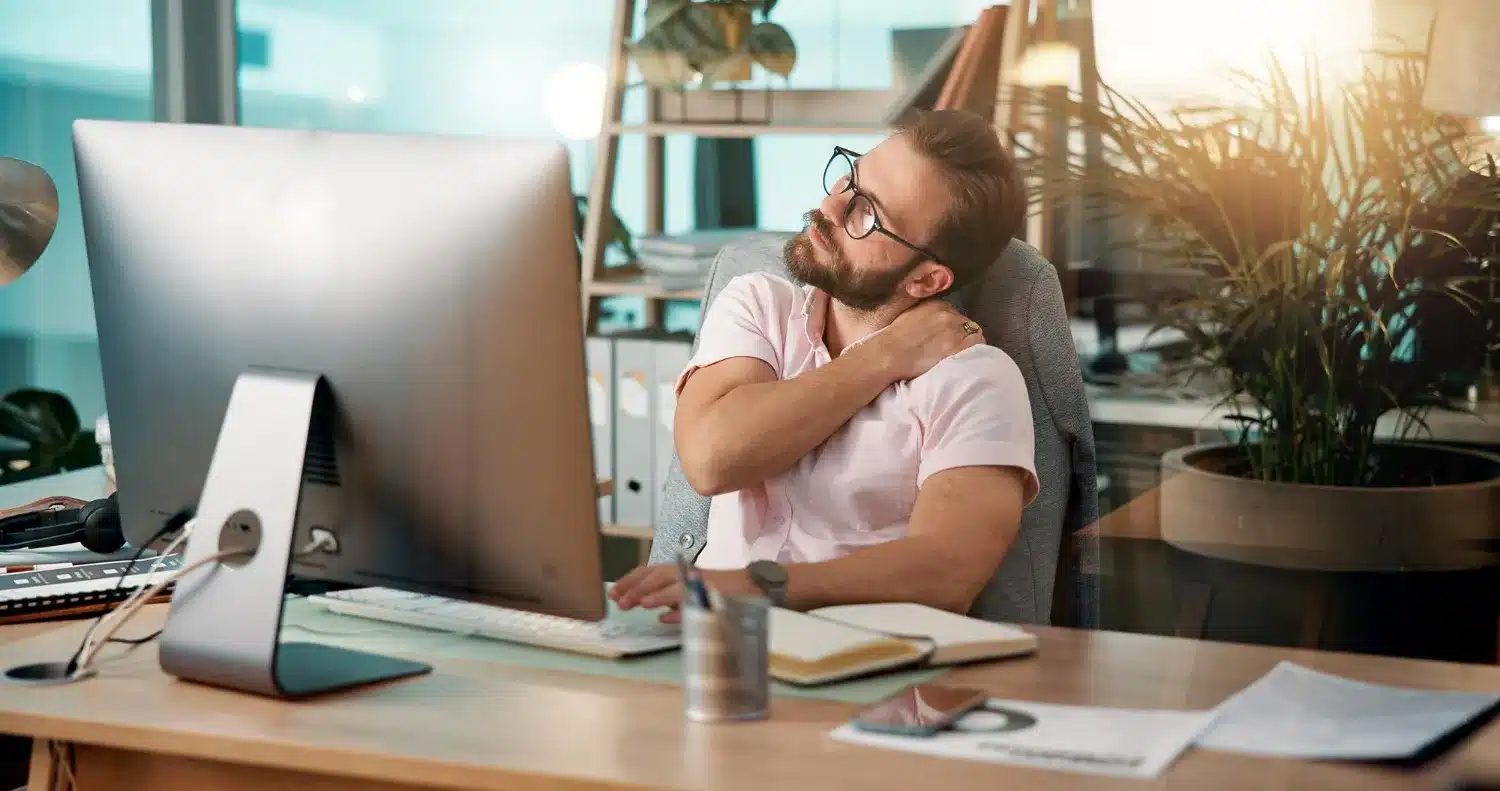
Why Desk Work Often Leads to Upper Trap Tightness?
For many people, the upper traps stay active for long periods during desk work. While sitting in front of a computer, certain muscles in the neck, shoulders, and upper back are constantly working to stabilize the position of the head and arms.
When using the keyboard for long periods, slightly elevated shoulders or inadequate arm support can put extra pressure on the traps. At the same time, if the screen is too low, too high, or too far away, people unconsciously move their heads forward or change their neck position.
Another important issue is static posture. While a position may be comfortable for a short time, sitting in the same position for a long time can tire the muscles. This muscle fatigue can gradually create tension, stiffness, and neck pain in the upper shoulders.
The Most Common Cause: Forward Head Posture
Many people unknowingly develop a forward head posture while working at a desk, meaning the head moves forward from its normal position. People often tilt their heads slightly to see the screen better or concentrate on work. When the head moves forward, it puts pressure on the cervical spine and surrounding muscles. The neck muscles have to work harder than normal to support the head's weight.
This extra work can cause muscle fatigue, especially in the upper trapezius muscles, which help stabilize the neck and shoulders. Therefore, if the forward head posture is maintained for a long time, the upper traps are forced to work extra and can gradually feel overloaded. As a result, it is not uncommon for tension, stiffness, and neck discomfort to develop in the upper part of the shoulders.
Why Tight Doesn't Always Mean Short
Many people assume that if their upper traps feel tight, the muscles must be small or tight. But it's not always that simple. In some cases, the upper traps can feel tight because they have been overworked for a long time.
These muscles help stabilize the neck, head, and shoulders while working at a desk. If they are working for hours, they can feel overworked, fatigued, or overloaded. This can create tension or tightness, even though the muscles haven't physically shortened.
Common Signs of Upper Trap Tightness From Desk Work
Upper trap tightness can develop gradually and is often felt more after long periods of desk work. Common symptoms include:
- Neck stiffness: Neck feeling stiff or less flexible
- Tight shoulders: Feeling of tension, heaviness, or stiffness in the shoulders
- Headaches: Headaches, especially related to tension in the neck and shoulders
- Discomfort between the neck and shoulder: Feeling discomfort or pressure in the area between the neck and shoulders
- Fatigue while working: Feeling tired quickly or feeling heavy in the muscles while working
- Reduced neck mobility: Feeling less comfortable than usual when turning your head or looking in different directions
What Actually Helps Upper Trap Tightness?
Improve Monitor Height
Try to keep the top of the monitor close to eye level. If the screen is too low, the head may lean forward, which can put extra pressure on the cervical spine and neck muscles.
Relax Elevated Shoulders
Many people unconsciously raise their shoulders slightly while working. Check your posture occasionally and try to keep your shoulder blades naturally relaxed. This can reduce unnecessary stress on the trap muscles.
Take Regular Movement Breaks
During long desk work, it can help to stand up, walk around, or change positions for short periods every 30–60 minutes. Regular movement breaks help reduce muscle fatigue.
Improve Sitting Posture
Try to maintain a comfortable and natural posture. The goal is to keep your neck and shoulders free from unnecessary stress, as sitting in an uncomfortable position for long periods can increase neck pain and upper trap tension.
Strengthen Supporting Muscles
It's important not only to stretch, but also to strengthen the body's supporting muscles. Especially the muscles that control the upper back and shoulder blades, which can help reduce overreliance on the upper traps.
Simple Exercises and Stretches
Chin Tucks
Sit or stand up straight. Without lowering your head, slowly pull your chin back, as if creating a double chin. Hold for a few seconds, then return to a neutral position. This can help reduce forward head posture and improve neck alignment.
Upper Trap Stretch
Slowly tilt your head to one side and apply gentle pressure with your hand. Hold for 20–30 seconds, then repeat on the other side. This can help relieve tension in the upper traps.
Scapular Retractions
Sit up straight and slowly pull your shoulder blades back together. Hold for a few seconds and release. This helps activate the muscles in your upper back.
Wall Slides
Stand with your back against a wall and slowly move your hands up and down. This can help improve shoulder mobility and increase shoulder blade control.
How to Prevent Upper Trap Tightness During Desk Work
The most effective way to prevent upper trap tightness is to develop good workstation habits. Position the monitor so that the top of the screen is close to eye level. Keep the keyboard and mouse close to your body so your shoulders don't have to tilt forward or up unnecessarily.
It's also important to take regular movement breaks during long desk work. Standing up or walking around for a few minutes every 30-60 minutes can help reduce the stress on your trapezius muscles.
Stress can also increase tension in the neck and shoulder muscles. Therefore, stress management, regular exercise, and good posture habits can help reduce neck pain and upper trap discomfort.
Still Struggling With Upper Trap Tightness During Desk Work?
If upper trap tightness keeps coming back even after stretching, workstation improvements, and regular movement breaks, other causes may be at play. In some cases, cervical spine problems, joint restrictions, or muscle imbalances can place excess stress on the neck and shoulder muscles.
If tension, stiffness, or discomfort begins to affect your ability to concentrate, sleep, or do daily activities, you may need a more detailed evaluation. A physical therapist or physiotherapist can help identify possible causes by evaluating your posture, movement patterns, and neck and shoulder function.
At Rugby, we help you understand the root cause of neck, shoulder, and posture-related problems and create a personalized treatment plan tailored to your needs.