
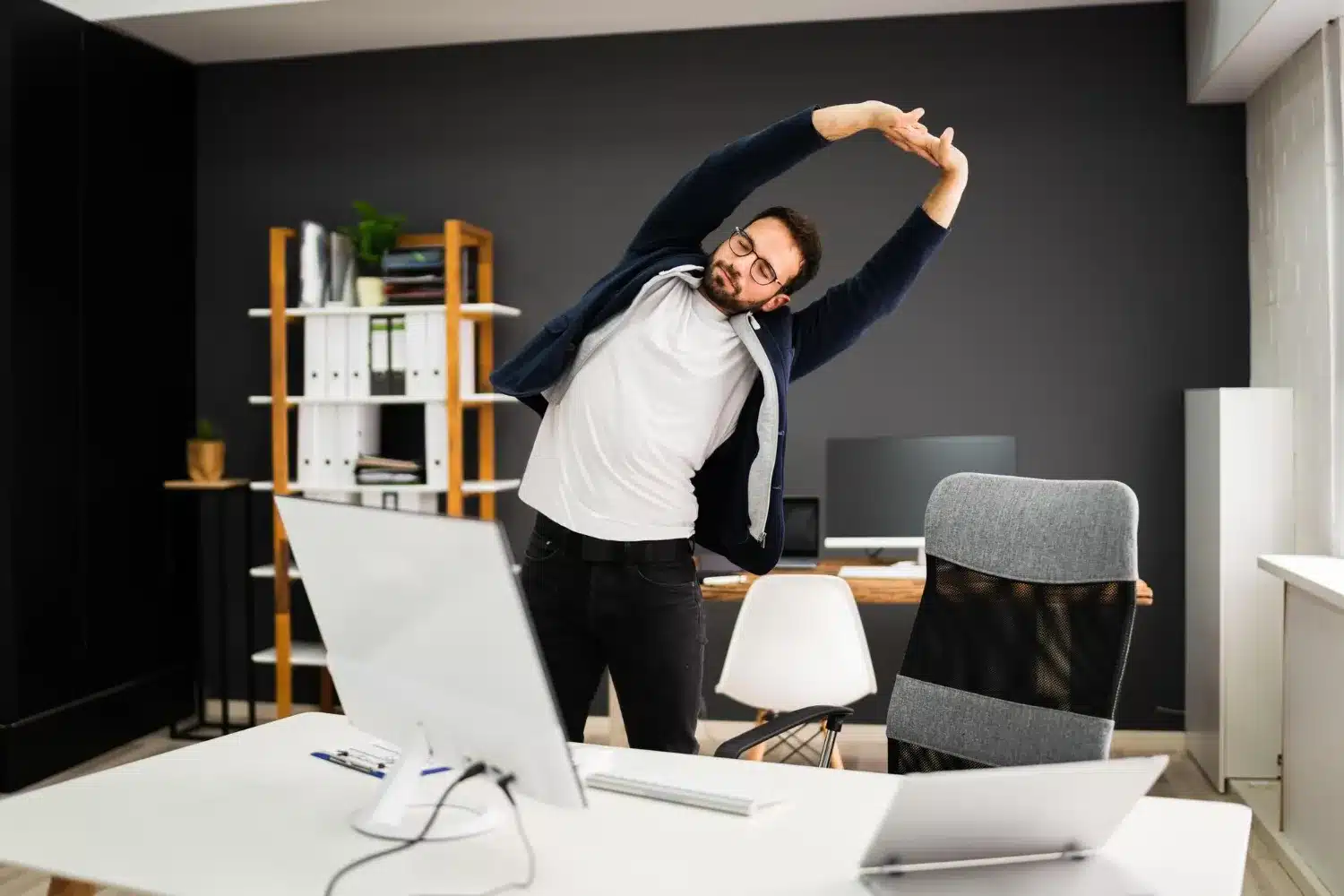
After hours of working at a desk, you may feel stiffness in your neck, shoulders, back, or hips when you stand up. This stiffness may become more noticeable as the afternoon progresses. Staying in the same position for a long time reduces movement, which can contribute to this discomfort. This doesn't mean you don't exercise regularly. Many times the problem comes from not moving for a long time.
A few minutes of movement every hour can help break up these long periods of sitting or static positions. In this guide, you'll learn which office stretches you can do every hour, how to do them safely, and how to add these short movement breaks easily into your workday.

Why Stretch Every Hour?
If you sit at a desk for long periods of time or work in the same position, your body gets less movement. This can lead to stiffness or desk-related discomfort in your neck, shoulders, back, and hips. Regular short movement breaks can help reduce the effects of staying in the same position for long periods.
A habit of stretching every hour can serve as a simple reminder. Instead of relying on one long stretching session, you can take small movement breaks throughout the workday. However, taking breaks every hour may not always be possible. In that case, you can take more frequent small movements or regular breaks that suit your work.
5 Office Stretches to Do Every 1 Hour
You can do the following stretches during a few minutes of movement break every hour. If you feel pain or sharp discomfort while doing any stretch, stop and don't force the range.
1. Neck / Chin Tuck Stretch
How to do it:
Sit up straight and place your feet on the floor. Keep your head straight and look straight ahead. Now, without lowering your head, slowly tilt your chin back, as if you are creating a small double chin. Hold for a few seconds and slowly return to the starting position.
How long:
Hold for about 5–10 seconds and repeat 5–10 times.
Why it helps:
When you stare at a desk or screen for long periods of time, you may unknowingly tilt your head forward. This gentle movement can help you become more aware of your head and neck position.
Desk cue:
You can do this at the beginning of each hourly movement break.
2. Thoracic / Upper-Back Stretch
How to do it:
Sit up straight in your chair and place your hands behind your head. Keep your elbows slightly out. Now slowly open your chest and gently extend your upper back toward the chair back. Keep the movement comfortable, and don't over-arch your lower back.
How long:
Repeat 5–8 times, slowly and with control.
Why it helps:
Sitting at a desk for long periods of time can make your upper back and chest muscles feel tight or stiff. This movement can help to move your upper back and break up long periods of static sitting.
3. Seated Figure-4 / Hip Stretch
How to do it:
Sit on a chair with both feet on the floor. Place your right ankle on your left thigh, so that your right leg forms a figure-4 shape. Keeping your back as comfortable as possible, lean forward slightly until you feel a gentle stretch around your hips. Then repeat on the other side.
How long:
Hold for about 20–30 seconds on each side.
Why it helps:
If you sit for long periods, your hips can stay in the same position, and stiffness can develop. This stretch can help bring gentle movement around the hips.
4. Shoulder / Chest Opener
How to do it:
Stand or sit up straight. Hold your hands together behind your back if that feels comfortable. Slowly open your chest and gently draw your shoulder blades together. Keep your shoulders away from your ears, and your body relaxed throughout the movement.
How long:
Hold for about 15–20 seconds and repeat 2–3 times.
Why it helps:
If you're leaning forward for long periods of time during desk work, your chest and shoulders may feel stiff. This gentle opener can help move your chest and shoulders and help you change position from prolonged desk posture.
5. Standing Hip Flexor / Full-Body Movement
How to do it:
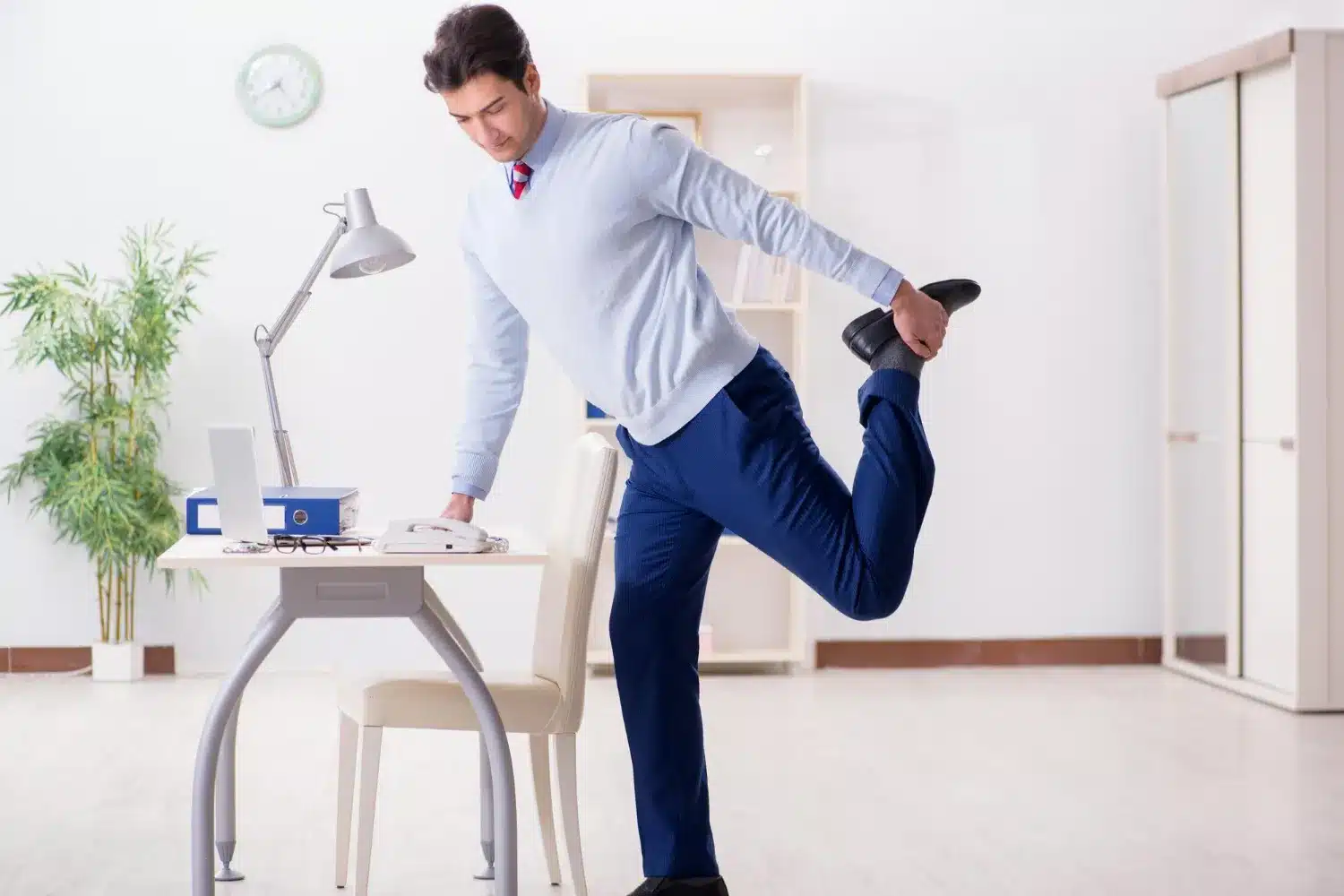
Get up from the chair and stand straight. Place one foot forward and the other foot slightly back. Bend your front knee slightly and slowly bring your hips forward until you feel a gentle stretch in front of your back hip. Then repeat on the other side.
How long:
Hold for about 20–30 seconds on each side.
Why it helps:
Sitting for long periods keeps your hips flexed. Doing this movement while standing helps you get out of that seated position and lets your hips and entire body move again.
Do You Need to Do All 5 Every Hour?
No, you don't have to do all 5 movements on each hourly break. You can choose the movements based on the time of day, your body's needs, and how long you've been in the same position.
For example:
Hour 1: Neck + shoulders
Hour 2: Upper back + chest
Hour 3: Hips + legs
Hour 4: Full-body movement
You can choose one or two movements at a time and do others at different times of the day if you want. The goal isn't to do a full workout every hour. Instead, add regular movement between sitting in one place or staying in the same position for a long time. A routine that you can regularly adapt to your workday is more practical.
How Long Should an Hourly Stretch Break Take?
A short movement break can usually last about 1–3 minutes. You don't have to turn each break into a long stretching session. Instead, make it a habit to get up and move regularly.
Make Hourly Movement a Work Habit
To create a habit of moving every hour, incorporate it into your existing work routine. This reduces the stress of remembering to do it separately and makes it easier to do it regularly.
Use an Existing Cue
Use your existing routine as a reminder to move. For example, you can move for a while after finishing an email, after a meeting, while refilling your water, or after completing a task.
Keep Movements Visible
Keep a small stretch list next to your monitor. This will help you quickly remember which movements to do when taking a break and reduce the time it takes to decide.
Use Reminders Initially
Start with a calendar notification or phone reminder. After a few days of regular use, your work routine can become a natural cue for movement.
Rotate Instead of Repeating Everything
You don't have to do the same movement every break. You can work different body areas like your neck, shoulders, upper back, hips, and legs at different times of the day.
The most important thing is consistency. Small, regular movements can be easier to maintain in your workday than one long stretching session that happens infrequently.
When Stretching Isn't Enough?
Desk stretches can help reduce everyday stiffness, but recurring pain isn't always just a flexibility problem. If the pain comes back repeatedly, gets worse, stays on one side for a long time, or symptoms like numbness or tingling appear, then the matter needs to be taken seriously. Further assessment may be necessary if movement is limited or symptoms interfere with your work or daily life.
If hourly stretching provides relief for a while but the same pain returns repeatedly, the problem may not be just sitting for long periods. In Rugby, we assess your symptoms, movement, and contributing factors, not just the tight area. We can develop a personalised physiotherapy approach based on your assessment findings. If your pain returns despite regular movement, book an assessment with our physiotherapy team.